Spy Thriller Guide
Best Realistic Spy Thrillers

The best realistic spy thriller for most readers is Tinker Tailor Soldier Spybecause it treats intelligence work as a slow contest of memory, status, recruitment, and institutional rot instead of costume-play heroics. If you want the same realism in a shorter and colder package, move to The Spy Who Came in from the Cold. If you want modern field texture instead of classic Cold War disillusionment, Red Sparrowis the better turn.
Check the title, author, edition and current availability on Amazon. Availability and price can change — confirm before purchasing.
Which realistic spy thrillers actually feel like espionage instead of action fantasy?
| Book | Best For | Realism Angle | Commitment |
|---|---|---|---|
| Tinker Tailor Soldier Spy | Best overall realistic spy thriller | Readers who want institutional betrayal, tradecraft, bureaucracy, and moral corrosion rather than chase-scene fantasy. | 423 pages |
| The Spy Who Came in from the Cold | Best if you want realism in a tighter package | Readers who want one of the bleakest Cold War spy novels without committing to a giant cast or dense timeline puzzle. | 240 pages |
| The Company | Best sprawling realistic CIA epic | Readers who want intelligence history, multidecade CIA tradecraft, and the texture of bureaucratic power across decades. | 897 pages |
| Red Sparrow | Best modern tradecraft novel | Readers who want a more contemporary realism pick with operational detail and fewer romantic illusions about the work. | 448 pages |
| Slow Horses | Best realistic spy thriller with dark humor | Readers who want bureaucratic realism, washed-up intelligence officers, and a meaner comic register without sacrificing operational credibility. | 336 pages |
What makes a spy thriller feel realistic in the first place?
Realistic espionage fiction usually shrinks the fantasy and expands the friction. Case officers spend more time waiting, reading people, misjudging incentives, and navigating internal hierarchy than sprinting through airports. The strongest books in this lane care about defectors, dead drops, double meanings, surveillance fatigue, and what a service does to the souls of the people it employs.
If you want the wider canon after this list, the next internal stop is our best spy thriller bookspage, while Cold War specialists should move to best Cold War thriller books. For bibliography context on the major le Carre titles, Penguin's John le Carre author page is a solid reference.
Why is Tinker Tailor Soldier Spy still the best realistic spy thriller?
Tinker Tailor Soldier Spy is the best realistic-spy-thriller recommendation for readers who want institutional betrayal, tradecraft, bureaucracy, and moral corrosion rather than chase-scene fantasy. and runs about 423 pages.
George Smiley returning to uncover a Soviet mole inside the Circus is still the gold-standard answer when someone asks for realistic espionage fiction. The realism comes from structure and temperament as much as subject matter. Meetings matter. Files matter. Career histories matter. Loyalty is negotiated through class, fatigue, vanity, and old humiliation rather than flashy villain speeches. Readers who come expecting Bond energy often bounce. Readers who want the feeling of being trapped inside a decaying institution usually decide this is the book that ruined lighter spy fiction for them.
| Why Read It | Why Wait |
|---|---|
|
|
Skip this if: Skip this if you need very fast momentum or clean exposition every few pages.
Click Here to Buy on AmazonIs The Spy Who Came in from the Cold the best shorter realistic espionage novel?
The Spy Who Came in from the Cold is the best realistic-spy-thriller recommendation for readers who want one of the bleakest cold war spy novels without committing to a giant cast or dense timeline puzzle. and runs about 240 pages.
Alec Leamas is tired, angry, and already half-broken before the operation fully starts, which is exactly why the novel feels so credible. The tradecraft is less about gadgetry than about manipulation, positioning, false defections, and what intelligence services are willing to spend human beings to achieve. The realism here is existential as much as procedural. Very few novels capture the idea that espionage can be both strategically important and spiritually ruinous with this much compression.
| Why Read It | Why Wait |
|---|---|
|
|
Skip this if: Skip this if you want a glamorous field-agent fantasy or a comforting moral frame.
Click Here to Buy on AmazonWhen should you read The Company instead of a tighter spy thriller?
The Company is the best realistic-spy-thriller recommendation for readers who want intelligence history, multidecade cia tradecraft, and the texture of bureaucratic power across decades. and runs about 897 pages.
Littell covers the CIA from the early Cold War through later geopolitical shocks with the scale of a historical epic and the emotional skepticism of a veteran observer. The result feels less like a single thriller than a full ecosystem of case officers, analysts, defectors, handlers, and rival services trying to convert partial information into action. It is a realism pick because it understands how much espionage depends on recruitment, patience, internal politics, and misreading rather than heroic certainty.
| Why Read It | Why Wait |
|---|---|
|
|
Skip this if: Skip this if you want a single clean mission plot instead of a broad institutional novel.
Click Here to Buy on AmazonWhy does Red Sparrow work if you want modern realistic tradecraft?
Red Sparrow is the best realistic-spy-thriller recommendation for readers who want a more contemporary realism pick with operational detail and fewer romantic illusions about the work. and runs about 448 pages.
Written by a former CIA officer, Red Sparrow pays unusual attention to recruitment psychology, surveillance discipline, official-cover constraints, and the slow calculation behind trying to turn an asset. Dominika Egorova is more stylized than a strictly documentary protagonist, but the novel earns credibility in the parts that matter: competing services making imperfect decisions with compromised information. It is one of the strongest choices for readers who want recent-state-actor espionage fiction that still feels grounded in how services actually work.
| Why Read It | Why Wait |
|---|---|
|
|
Skip this if: Skip this if you dislike extensive procedural detail or canteen-menu-level intelligence-world texture.
Click Here to Buy on AmazonCan Slow Horses still count as realistic if it is funny?
Slow Horses is the best realistic-spy-thriller recommendation for readers who want bureaucratic realism, washed-up intelligence officers, and a meaner comic register without sacrificing operational credibility. and runs about 336 pages.
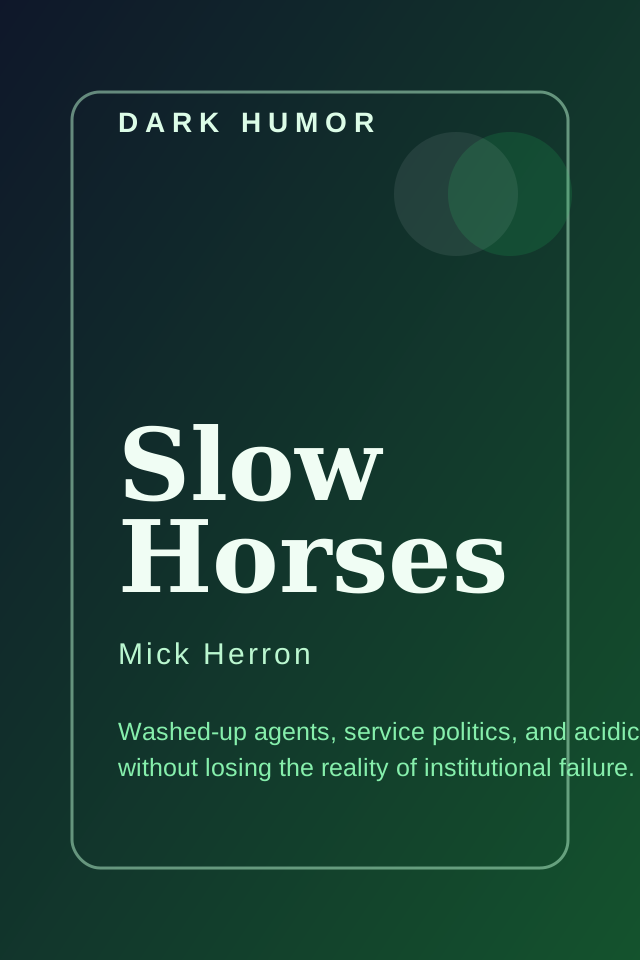
Slough House is full of sidelined MI5 failures, and that premise lets Herron do something smart: he keeps the institutional realism but swaps old-guard solemnity for contempt, embarrassment, and office rot. Jackson Lamb is grotesque on purpose, yet the book never forgets how organizations protect themselves, bury mistakes, and use the damaged people left on the margins. It is funny, but it is not unserious. The satire lands precisely because the service politics underneath it feel recognizably real.
| Why Read It | Why Wait |
|---|---|
|
|
Skip this if: Skip this if you want solemn Cold War melancholy and zero satirical edge.
Click Here to Buy on Amazon