Reading • Membership decision guide
Kindle Unlimited Trial: Test the Catalog First
As an Amazon Associate, BestPickZone earns from qualifying purchases. We may also earn a bounty from eligible sign-ups through our affiliate links, at no extra cost to you.
By BestPickZone • Published October 3, 2026 • U.S. programs • Researched editorial guidance
A Kindle Unlimited free trial is worth considering when the subscription catalog contains several books you actually want to read and you can test your normal reading pace before renewal. It is not a subscription to every Kindle book sold by Amazon. The best trial starts with a title shortlist, not a signup followed by a search for something to justify it.
Affiliate link. Check the exact plan, eligibility, current price, and renewal terms on Amazon before signing up. Trial availability is not guaranteed.
What is Kindle Unlimited, and what is it not?
Kindle Unlimited is a borrowing subscription for a changing selection of digital titles. It differs from buying an ebook, and it differs from the reading benefits included with Prime. You should check whether a particular title displays Kindle Unlimited inclusion rather than assuming its Kindle format makes it eligible.
Amazon's Kindle Unlimited help page explains the catalog and borrowing model. It currently describes a twenty-title borrowing limit and notes that catalog availability can change. Treat borrowed books as subscription access, not permanent additions to a purchased ebook collection.
A dedicated Kindle device is not the only way to read: the Kindle app can be part of your evaluation. Use the device you already have first if it suits you. Buying a new e-reader just to test a subscription adds another purchase decision before you know whether the catalog is worthwhile.
How do you check the catalog before joining?
Make a list of ten titles or authors you would genuinely like to read, then inspect their current listings for Kindle Unlimited availability. Record the exact edition and language. This is more informative than browsing a broad genre page and assuming all your favorites will be included.
For series, check several installments rather than only the first. A borrowed first volume can be enjoyable, but the cost changes if later volumes require separate purchases. You may still choose the series; simply understand the likely path before letting a trial become an unplanned buying commitment.
Use our genre-fiction guides and author guides as reading inspiration, not as a claim that their recommendations are included. Catalog membership must be checked on Amazon at the time you read. A strong reading list and a strong subscription catalog are related but different things.
What is a useful trial plan?
Choose two or three books you already want, then read during your normal available time. Do not fill every borrowing slot as an achievement. A small queue makes it easier to evaluate whether the subscription helps you finish satisfying books or mainly encourages endless browsing.
In the first week, test the basics: borrow a title, open it on your preferred device, adjust the type size, and confirm that downloaded reading works when you need it. Try your ordinary reading location, whether that is a phone on a train or an e-reader beside the bed.
In the second part of the trial, track completed books and abandoned books separately. Abandoning something you dislike is not a failure, but a subscription that repeatedly offers poor matches may not be valuable for you. Note why you stopped: style, subject, formatting, or simply lack of time.
How do you calculate the value without exaggerating it?
Compare the renewal fee with what you would actually spend to obtain the books you expect to finish. Do not multiply every borrowed title by its full purchase price if you would never have bought those books. Library availability and books you already own are relevant alternatives.
For illustration, if a subscription cost $12 for a month and you finished three books you would otherwise buy at $5 each, the avoided purchase total would be $15. But if you finished only one, or would have borrowed all three from a library, the financial argument changes. These numbers are an example, not a statement of the current Kindle Unlimited price.
There is also a difference between access and ownership. Paying somewhat more to own a reference book may be better than borrowing it if you expect to return to it for years. A fast-moving fiction reader may place less value on permanent access and more value on trying unfamiliar authors.
What should you know about included audiobooks?
Some Kindle Unlimited titles include narration, but the subscription should not be treated as access to the entire Audible store. Look for the relevant narration indicator and check the title's current terms. An audiobook edition existing alongside an ebook is not enough to prove that audio is included.
If audio is your primary format, compare our Audible Standard trial guide. If retaining purchased audio matters, the Premium Plus annual-plan analysis explains a different model. Choose the service that fits the format and titles you actually use.
For a mixed-format reader, try one eligible narrated title during the trial and see whether switching formats is useful in practice. Do not assign a large value to audio simply because the option exists on a small portion of your intended reading list.
Which readers are a poor match?
Readers who mainly want specific new releases from a narrow group of authors should verify the catalog especially carefully. If only one desired book is included, buying that book or borrowing it elsewhere may be simpler. Readers who finish a book every few months may also struggle to justify a continuing subscription.
A heavy reader can still be a poor fit if their preferred catalog is missing. A light reader can still value a subscription for variety, but should recognize that they are paying for flexibility rather than guaranteed savings. The quantity of titles advertised across the service is less important than the number you want next.
Reference-heavy reading is another caution. If you need a specific edition for work or study, compare it carefully with the borrowed version. Do not substitute a vaguely similar title just because it is included; a subscription should serve your reading purpose, not redefine it.
What should you check before renewal?
Record the trial end date and subsequent price during signup. Amazon decides trial eligibility and may display different offers to different accounts. If a charge is shown immediately, do not assume you are accepting a free trial. Read the final button and terms before proceeding.
Set a reminder several days before renewal. Review what you finished, what remains on your shortlist, and whether the next month looks similar. Manage cancellation through Amazon's subscription controls and verify the effective end of access shown in the confirmation. Do not assume deleting the app stops billing.
Should you keep it or consider a longer plan?
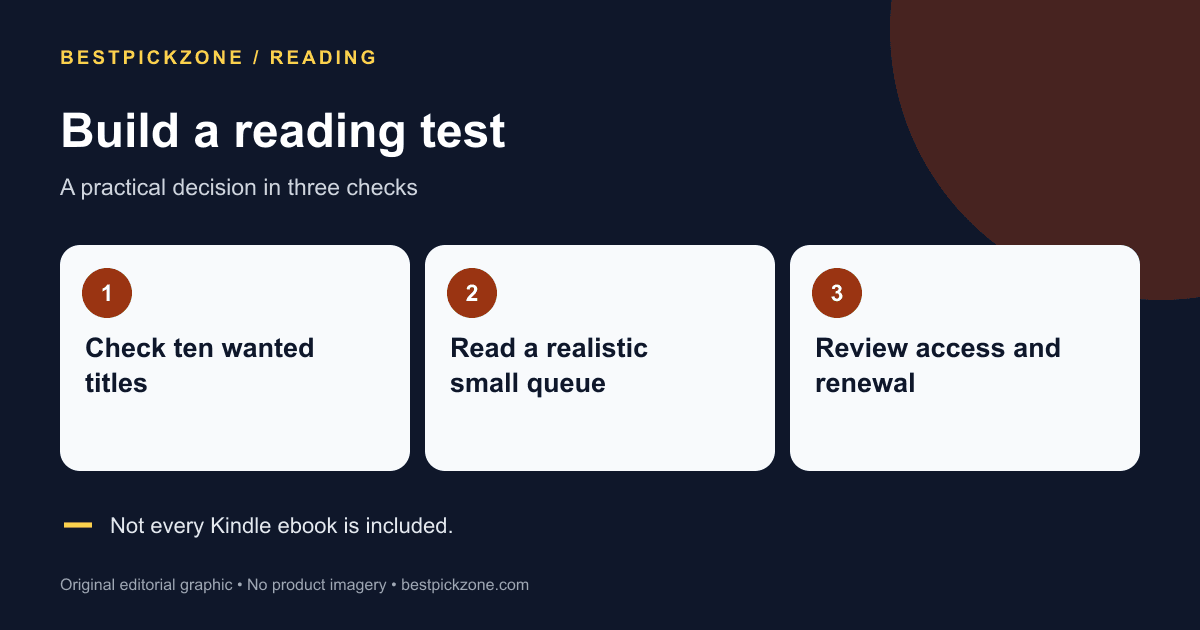
Start here: check ten desired titles, choose a small trial queue, and test your ordinary reading month. Skip this first: subscribing because you expect every ebook to be included or because borrowing many titles feels like saving money.
If the trial demonstrates a durable match, our 24-month Kindle Unlimited gift guide explains the longer commitment. Do not move directly from a few exciting days to two years of access without evaluating the catalog, your pace, and the recipient or account that will use it.
Affiliate link. Check the exact plan, eligibility, current price, and renewal terms on Amazon before signing up. Trial availability is not guaranteed.